Explore the Unknown

Discover the secrets of black holes, galaxies, and the origin of the universe.

Advertisement

Trending Now

Documentary Note

The Speed of Light Is Not a Bridge, It Is a Cage

A cinematic-scale perspective on time, distance, and how the universe hides itself.

Humanity has been fooled by the speed of light for thousands of years. In one second, light can circle the Earth seven and a half times. It looks insanely fast. But on a cosmic scale, it's slow—painfully slow.

The speed of light isn't a bridge. It's a cage.

What you're seeing from the Sun right now is an image from eight minutes ago. If the Sun exploded this instant, we'd live eight perfectly normal minutes without knowing anything was wrong.

It gets stranger. The Andromeda Galaxy we see tonight is frozen in time—2.5 million years old. Back then, humans hadn't even learned how to walk upright.

On the scale of the universe, light isn't really light. It's a letter that will never arrive.

Read full documentary note

Human radio signals have been traveling for a hundred years, and they've barely escaped one-tenth of one percent of the Milky Way. If Earth vanished tomorrow, 99.999% of the universe would never know humans existed—not for billions of years.

And the truly terrifying part? If an alien civilization discovered Earth today and decided to come find us, they wouldn't see Earth where it is now—they'd see where it was tens of thousands of years ago.

Our solar system is racing through the galaxy at 220 kilometers per second. In that time, Earth has moved billions of kilometers. By the time they reach the coordinates they saw, Earth wouldn't be there.

And worse—the universe is expanding faster and faster. Some regions are already moving away from us faster than light itself. Their light will never reach us. Ever.

So what does that mean? It means the universe is actively hiding itself from us.

So when we gaze into the universe, we are actually looking back in time.

The speed of light is not just the ultimate speed limit, it also binds time and space together. According to Albert Einstein's theory of relativity, the closer you move to the speed of light, the slower time passes for you.

If a spacecraft were to travel at near-light speed, only a few years might pass for those on board, while hundreds of years could have gone by on Earth.

And precisely because the speed of light has a limit, we can never see the universe as it exists "right now". Everything we see is history.

In a sense, the universe is not just a vast expanse of space, but a gigantic museum of time. And light is its only messenger.

Advertisement

Featured Articles

Latest and most popular articles from all categories
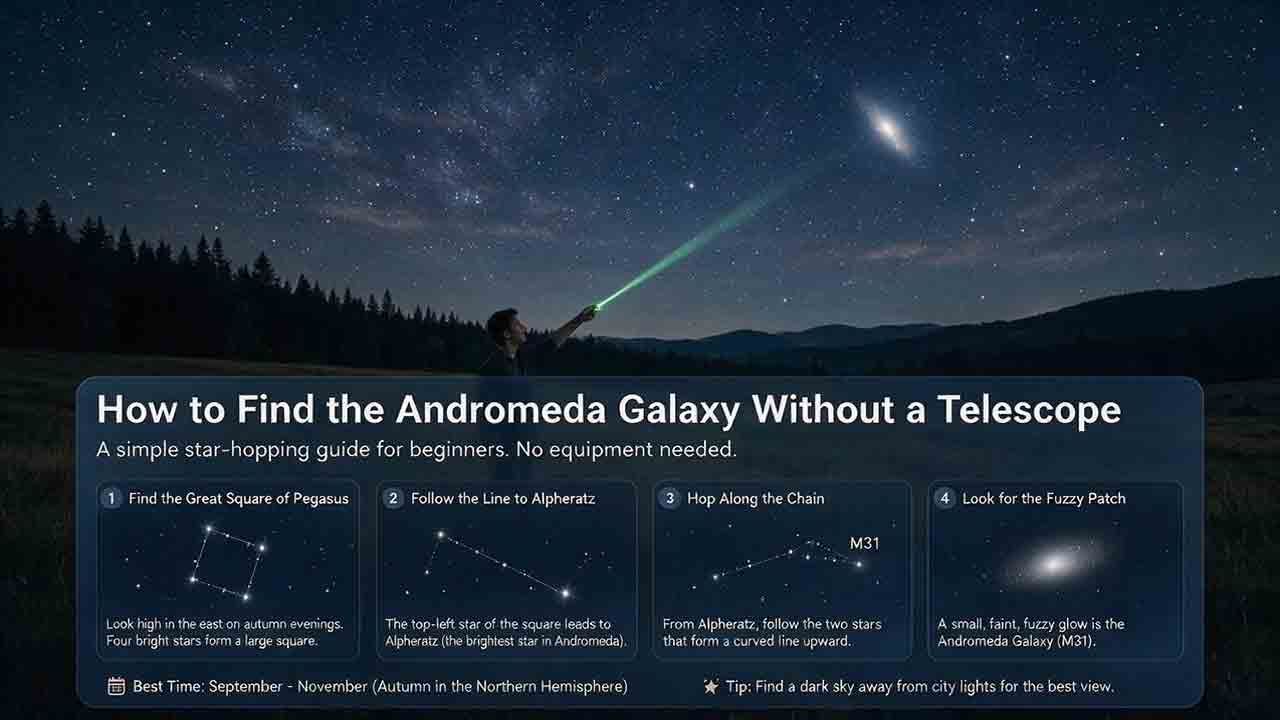
Constellations & Star HoppingHow to Find the Andromeda Galaxy Without a Telescope

How to Find the Andromeda Galaxy Without a Telescope

Finding the Andromeda Galaxy without a telescope is possible when you know which stars to use as landmarks. This practical guide explains how to start at the Great Square of Pegasus, identify Alpheratz, follow the Andromeda star chain to Mirach, and use two nearly equal short hops to reach Mu Andromedae and M31. It also explains what the galaxy realistically looks like to the naked eye, why dark skies and averted vision matter, and how binoculars can help confirm the target. Beginners can use the six-point observing checklist, three-night practice method, troubleshooting guidance, and reusable observation log to improve each attempt. The guide distinguishes calculated angular distances from practical field estimates and clearly explains its source-checking process without claiming personal testing. It is designed primarily for Northern Hemisphere observers while also addressing visibility limitations from Southern Hemisphere locations.

2026/08/055 minRead More
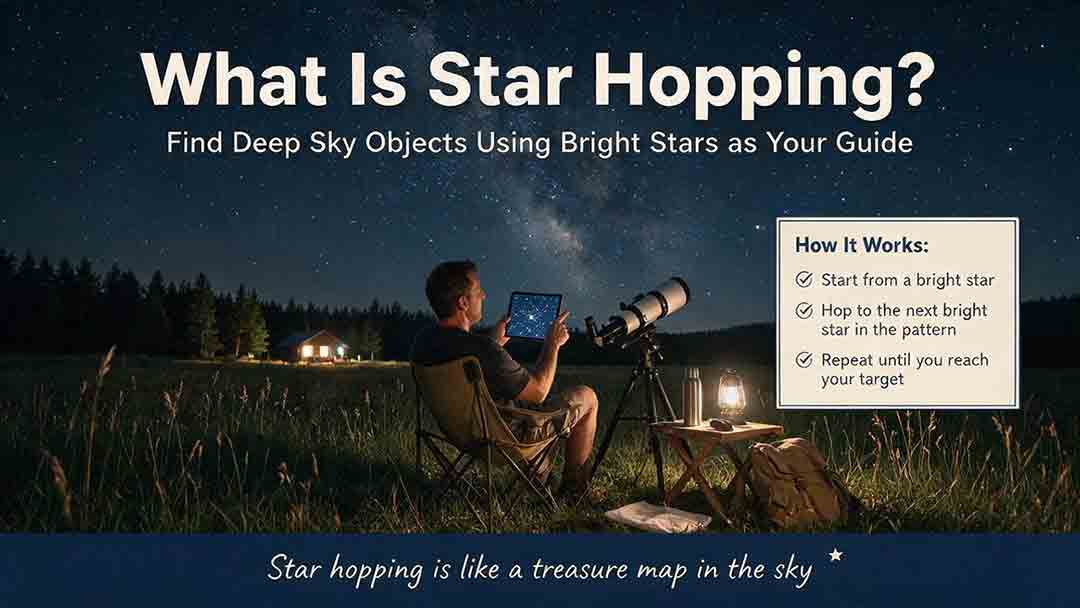
Constellations & Star HoppingWhat Is Star Hopping and How Do You Do It?

What Is Star Hopping and How Do You Do It?

Star hopping is a practical way to navigate the night sky by moving from a bright, recognizable star to a fainter target through a sequence of visible star patterns. This guide explains how beginners can plan a reliable route, align a finder, match a star chart to a telescope’s field of view, and recognize rotated or mirror-reversed images. It introduces the Anchor–Path–Field–Confirm method, provides a step-by-step observing process, and shows how field-of-view estimates can help determine a practical chart scale. A worked example demonstrates how to locate Messier 13 using the Keystone of Hercules, while the troubleshooting table addresses common problems such as finder misalignment, excessive magnification, incorrect chart orientation, and targets that remain invisible despite correct pointing. The included field checklist gives binocular and telescope users a repeatable method for planning and completing future star hops.

2026/08/055 minRead More
Constellations & Star HoppingThe Easiest Constellations for Beginners to Find

The Easiest Constellations for Beginners to Find

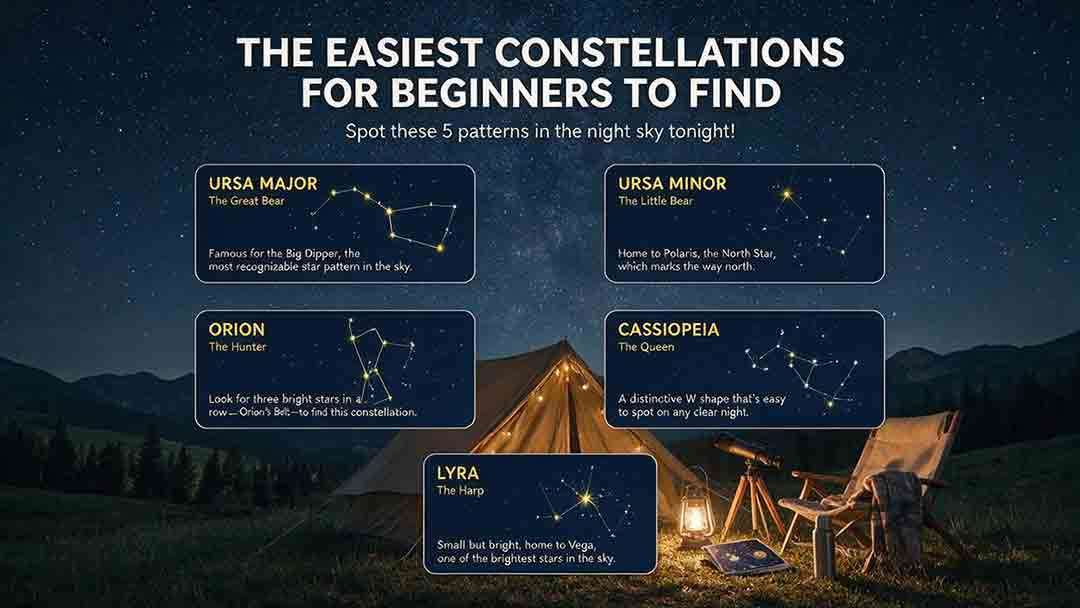
This beginner-friendly guide explains how to find Orion, Ursa Major through the Big Dipper, Cassiopeia, Cygnus, and Scorpius using clear naked-eye observing steps. It compares each pattern through an original Beginner Visibility Score and shows readers how to choose a first target based on season, latitude, light pollution, moonlight, and horizon visibility. The guide also clarifies the difference between constellations and asterisms, explains how the Big Dipper can point toward Polaris, and provides dedicated recommendations for Southern Hemisphere observers, including Crux. Practical tools include the Anchor-Pattern Method, the Three-Check Rule, a 10-minute observing session, city-sky guidance, troubleshooting advice, an equipment comparison, and a safety checklist. Authoritative references from the International Astronomical Union, NASA, NSF NOIRLab, and the European Southern Observatory support the key astronomical facts.

2026/08/055 minRead More
Constellations & Star HoppingHow to Use the Big Dipper to Find Other Stars

How to Use the Big Dipper to Find Other Stars

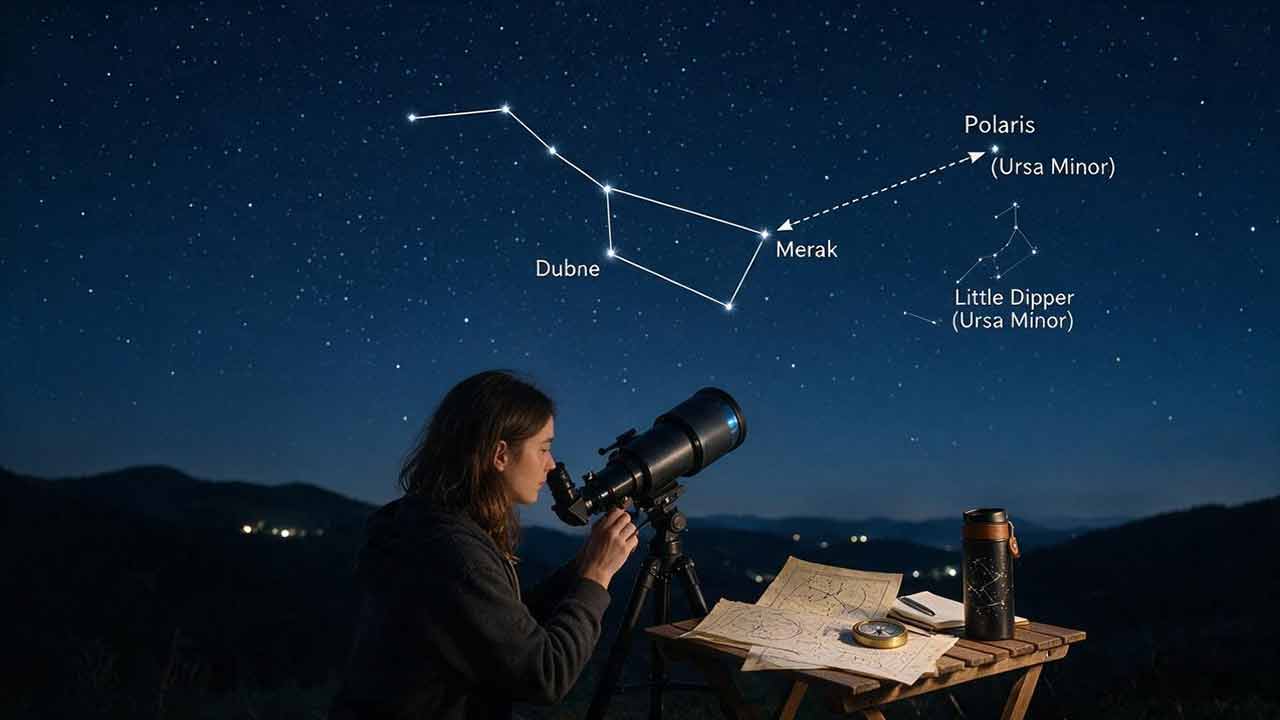
The Big Dipper is more than an easy-to-recognize star pattern—it is a practical starting point for navigating the Northern Hemisphere sky. This beginner-friendly guide explains how to use Merak and Dubhe to locate Polaris, follow the handle’s curve to Arcturus, continue toward Spica, and use Megrez and Phecda to identify the general region of Leo and Regulus. It introduces a clear Route–Pattern–Trait method for confirming each target instead of relying on brightness or color alone. Readers will also learn how latitude, season, light pollution, horizon obstructions, and nearby planets can affect a star-hop. Quick route summaries, troubleshooting guidance, binocular recommendations, an observation record, and a practical checklist make the article useful both for planning and for consulting outdoors. The guide relies on established astronomy references and clearly distinguishes precise pointer routes from broader directional guides.

2026/08/055 minRead More
Constellations & Star HoppingHow to Find the North Star

How to Find the North Star

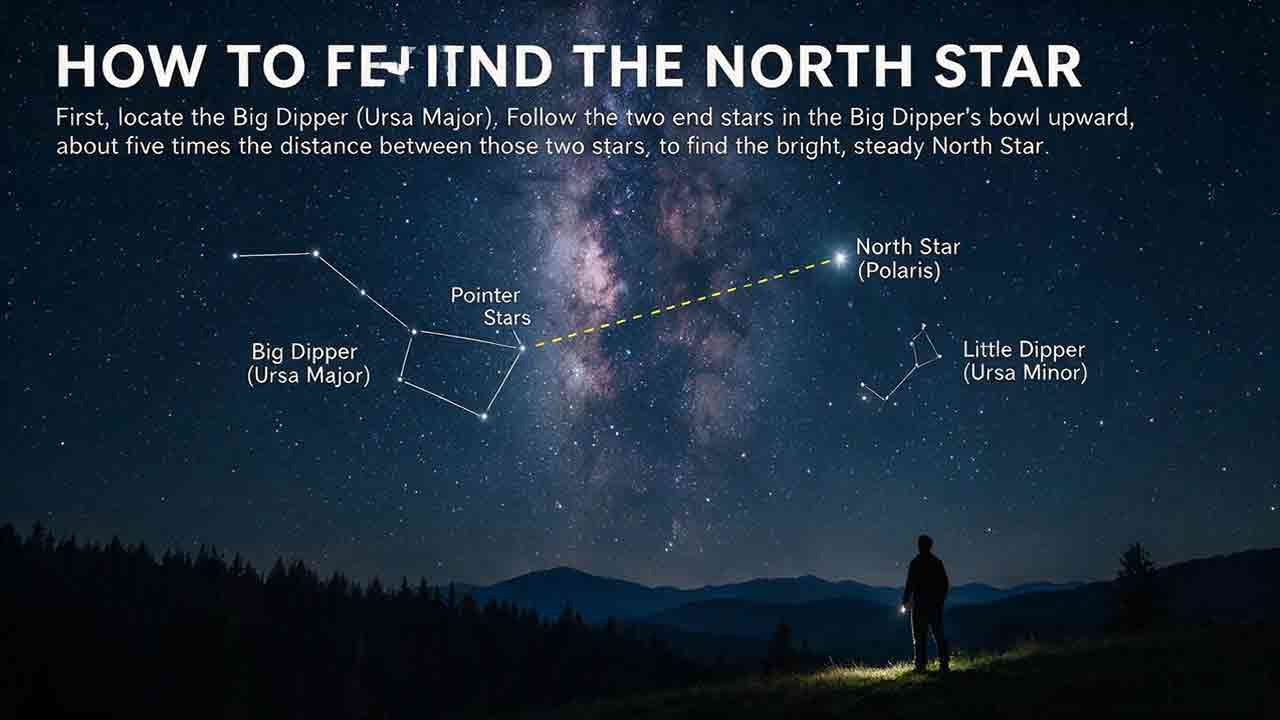
Finding the North Star becomes straightforward once you know how to use the Big Dipper’s two pointer stars, Merak and Dubhe. This practical guide walks beginners through the complete process of locating Polaris, confirming it by position and latitude, and avoiding common mistakes such as choosing the brightest star or following the pointer line in the wrong direction. It also explains why Polaris appears nearly stationary, how its altitude relates approximately to an observer’s northern latitude, and why the full Little Dipper may be difficult to see under city skies. Readers will find troubleshooting advice for haze, light pollution, blocked horizons, misleading astronomy apps, and compass differences caused by magnetic declination. The article also includes a quick confirmation checklist, viewing-condition comparisons, an observation log, and a seven-step field routine. Clear safety guidance explains that Polaris is useful for approximate orientation but should not replace proper navigation tools.

2026/08/055 minRead More
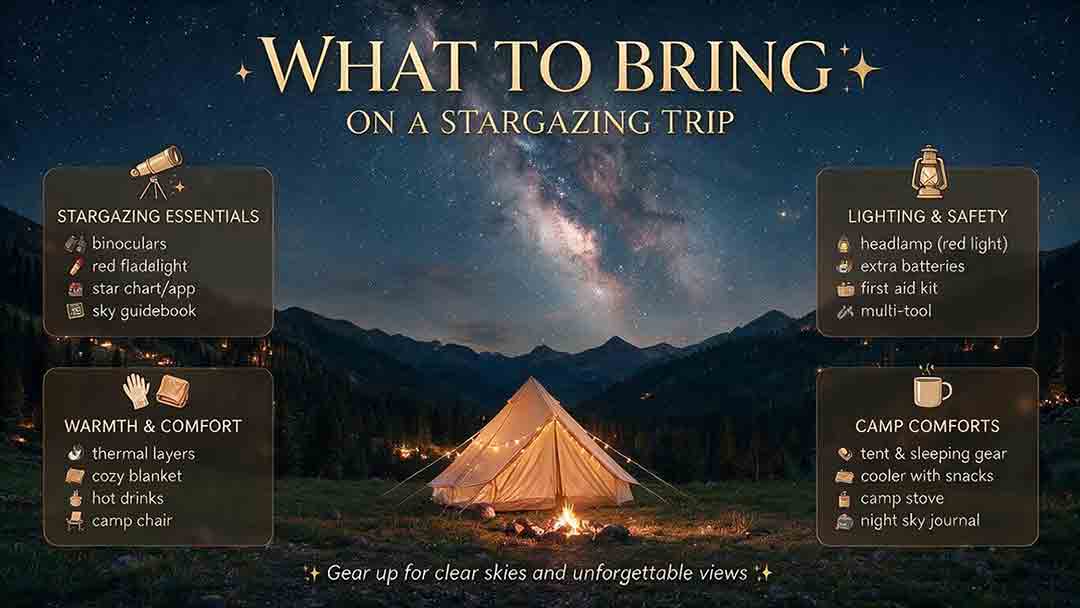
Dark-Sky Trips & GearWhat to Bring on a Stargazing Trip

What to Bring on a Stargazing Trip

A successful stargazing trip depends less on carrying every astronomy accessory and more on bringing the right safety, comfort, navigation, and observing essentials. This practical guide explains what to pack for backyard sessions, car-access dark-sky sites, hike-in locations, public star parties, overnight campgrounds, and astrophotography trips. It introduces the original NIGHT framework—Navigation, Insulation, Gear, Handling darkness, and Testing power—to help readers plan systematically. The article includes essential and optional equipment tables, a realistic battery-capacity calculation, trip-length checklists, dark-sky etiquette, lightning guidance, site-setup steps, and troubleshooting for common problems such as dew, failed lights, unstable tripods, missing adapters, and full memory cards. Readers also learn how to protect night vision, reduce unnecessary gear, verify legal access, prepare for changing nighttime temperatures, and plan a safe return. NASA, the U.S. National Park Service, and the National Weather Service provide the main authoritative guidance.

2026/08/055 minRead More
Advertisement

Science Deep Dive

High-quality long-form content exploring cosmic phenomena in depth
Stargazing While Camping: A Practical Planning Guide
Dark-Sky Trips & Gear

Stargazing While Camping: A Practical Planning Guide

Camping can provide long, convenient access to dark skies, but a successful astronomy trip requires more than choosing the darkest location on a map. This guide explains how to combine campground rules, weather, Moon timing, food storage, wildlife protection, quiet hours, power, dew control, and telescope setup into one workable plan. It introduces the original CAMP framework—Confirm access, Align conditions, Map functional zones, and Prepare fallbacks—plus a three-zone campsite layout separating sleeping, service, and observing areas. Readers can compare developed, walk-in, backcountry, dispersed, and astronomy-focused campgrounds; build a night schedule from daylight arrival through morning pack-up; and use practical decision tables for Moonlight, cloud, wind, dew, neighboring lights, and campfire impacts. The article also includes a hypothetical two-night family plan, a go/modify/cancel decision tree, troubleshooting guidance, and a complete campsite checklist grounded in NASA, National Park Service, and National Weather Service resources.

2026/08/055 min
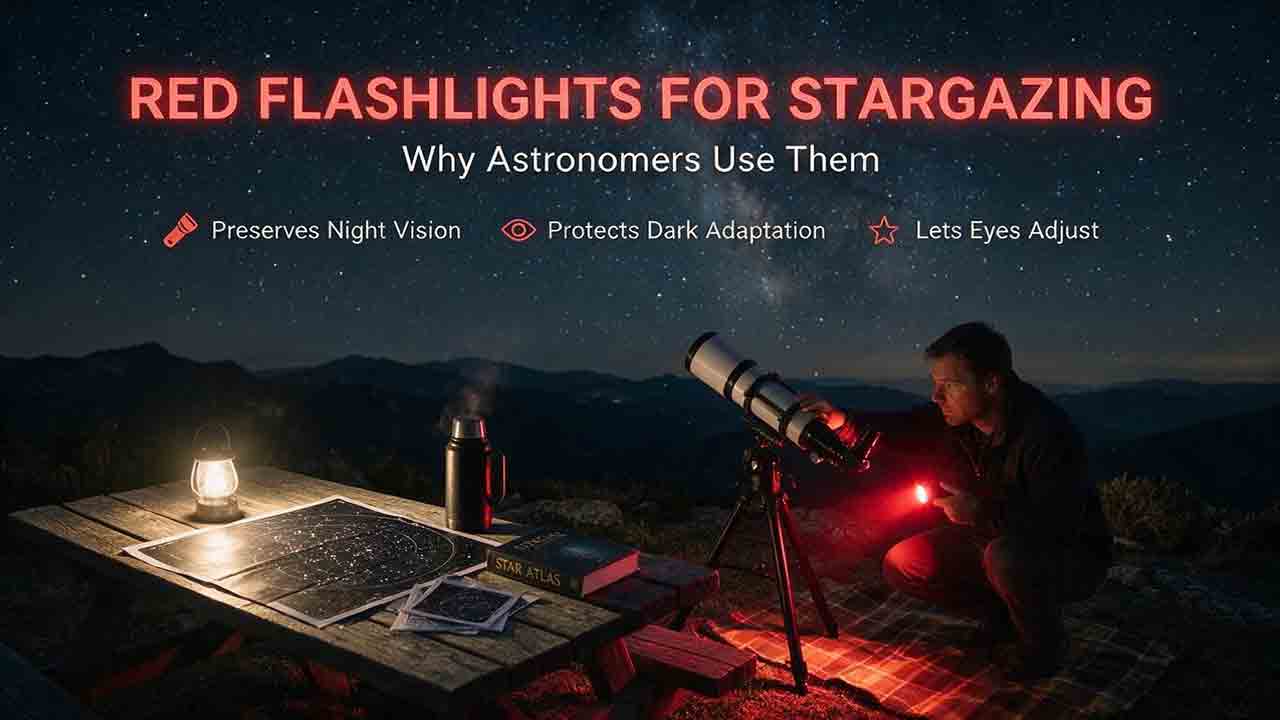
Red Flashlights for Stargazing: Why Astronomers Use Them
Dark-Sky Trips & Gear

Red Flashlights for Stargazing: Why Astronomers Use Them

Astronomers use dim red flashlights because dark-adapted rod vision is less sensitive to long-wavelength red light than to much of the visible spectrum. A controlled red beam can illuminate charts, eyepieces, cables, and walking paths while causing less disruption than a typical white flashlight. This guide explains how rods, cones, rhodopsin, wavelength, brightness, exposure time, and beam direction shape the result. Readers will learn why red light is not harmless, how to compare handheld lights and headlamps, which product features prevent accidental white-light activation, how to configure a phone screen, and when safety requires a white emergency light. The article also includes the RED-SAFE buying framework, a task-lighting table, a worked observing example, DIY filter guidance, star-party etiquette, troubleshooting advice, FAQs, and complete purchase and field-use checklists.

2026/08/055 min
How to Stay Warm and Comfortable During Winter Stargazing
Dark-Sky Trips & Gear

How to Stay Warm and Comfortable During Winter Stargazing

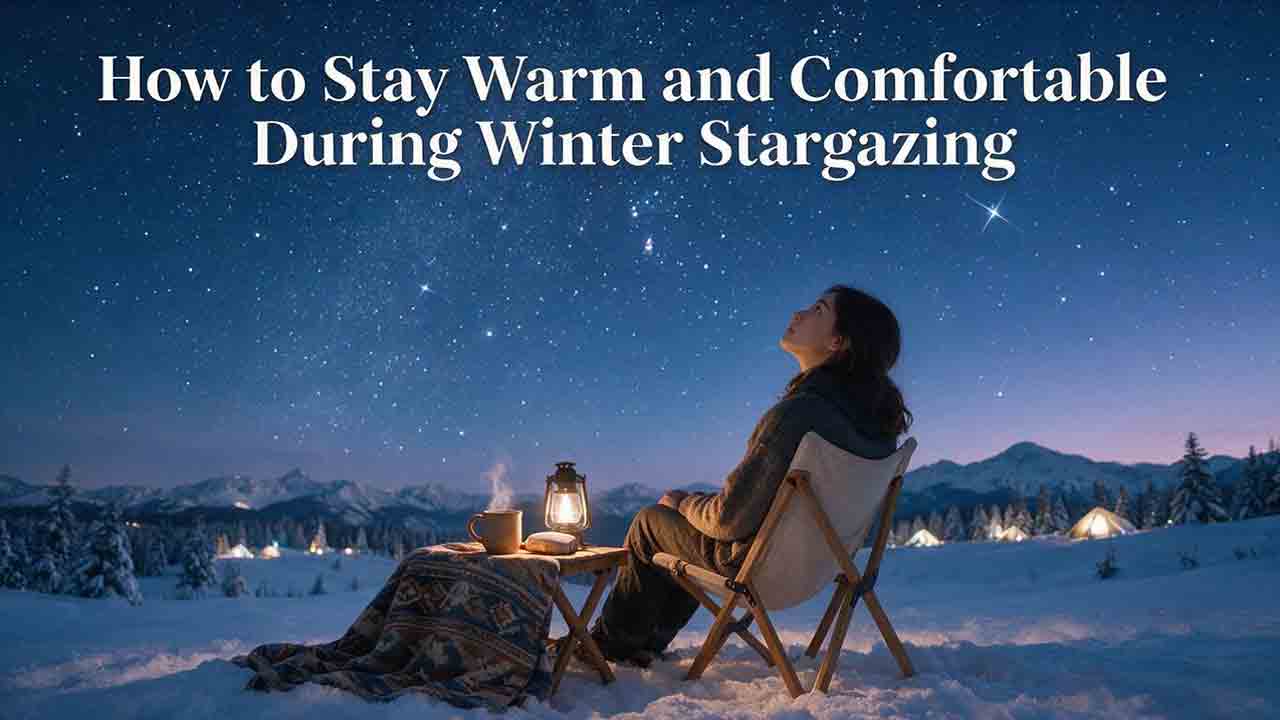
Winter stargazing requires more preparation than wearing one heavy coat because observers often remain nearly motionless for long periods. This guide explains how to check temperature, wind chill, road conditions, snow, and shelter before leaving; build a moisture-managing base, insulating middle, and wind-resistant outer layer; and protect hands, feet, head, face, chair, and ground contact. Readers will learn how to combine liner gloves with mittens, avoid sweat, plan warm-up breaks, use heated clothing safely, manage food and hydration, protect batteries, and prevent condensation when cold equipment returns indoors. The article also includes the WARMER planning framework, clothing and glove comparisons, a three-hour worked example, cold-stress warning signs, troubleshooting guidance, departure rules, FAQs, and a complete winter stargazing checklist.

2026/08/055 min
How to Find a Dark-Sky Site Near You
Dark-Sky Trips & Gear

How to Find a Dark-Sky Site Near You

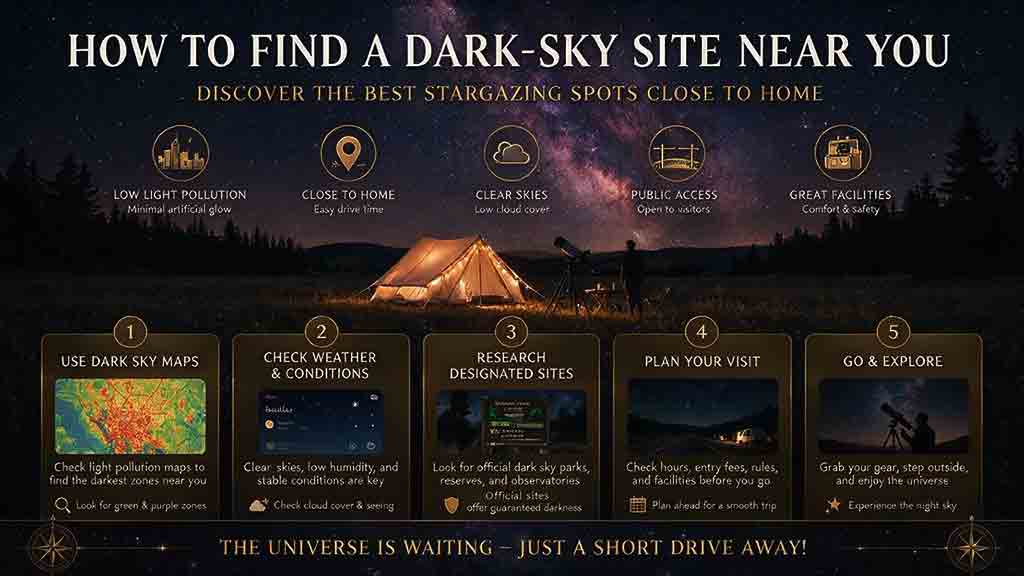
Finding a dark-sky site requires more than selecting the darkest color on a light-pollution map. This guide explains how to identify promising regions, search certified Dark Sky Places and official public-land directories, verify legal nighttime access, inspect roads and horizons, check Moon and weather conditions, and validate a location in daylight and after dark. Readers will learn how satellite nighttime-light data differs from ground-level sky quality, what a Bortle estimate can and cannot reveal, when a sky quality meter is useful, and how to compare parks, campgrounds, observatories, club fields, and remote public lands. The article also includes the DARK-SITE decision framework, a three-location worked example, a trip-value calculation, safety and etiquette guidance, gear recommendations, troubleshooting advice, FAQs, and a complete site-selection checklist.
2026/08/055 min
Binocular Stargazing: What Can You See?
Night Sky Guides

Binocular Stargazing: What Can You See?

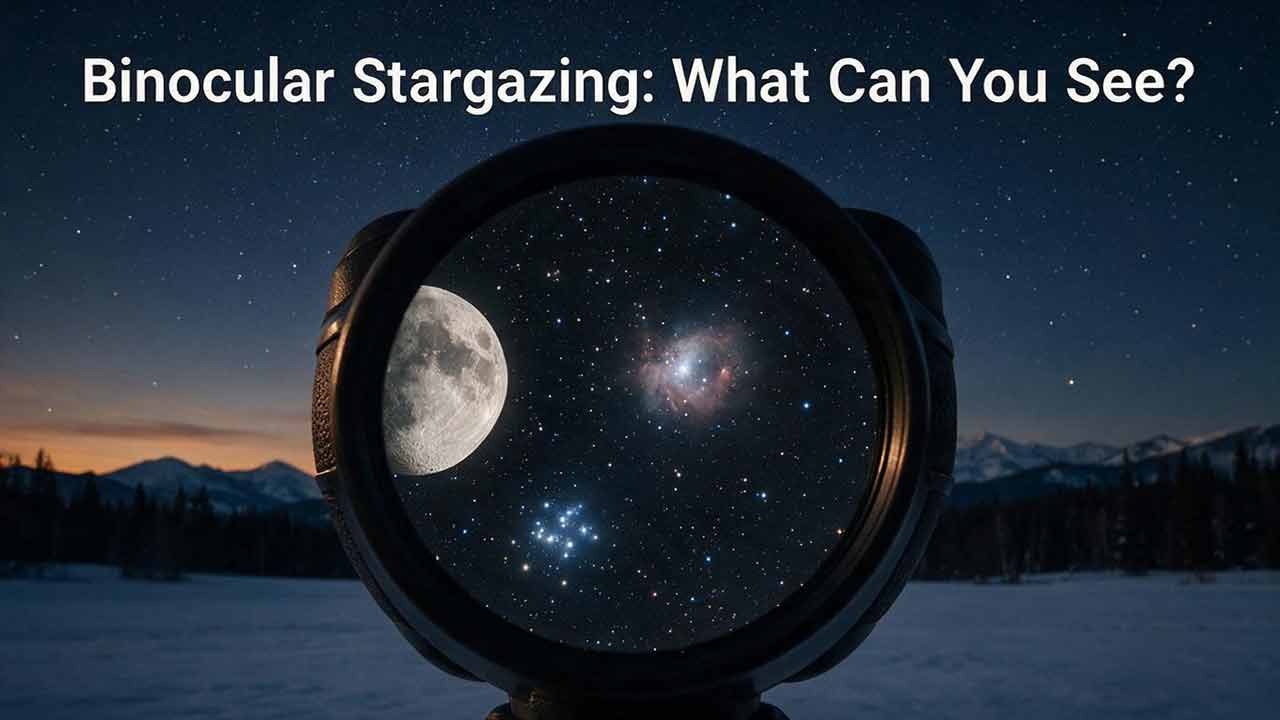
This guide explains what beginners can realistically see through binoculars at night and how to get the most from a simple astronomy setup. It covers practical targets including the Moon, Jupiter’s Galilean moons, open star clusters, nebulae, galaxies, Milky Way star fields, and bright comets. The article compares common binocular sizes such as 8x42 and 10x50, explains how magnification, objective diameter, exit pupil, and stability affect observations, and provides a practical framework for choosing suitable targets. It also introduces original tools including a Binocular Target Fit Score, a Jupiter moon tracking table, and a visibility log to help observers understand whether limitations come from sky conditions, target size, or equipment handling. Based on NASA guidance, professional astronomy resources, and official optical documentation, this article focuses on realistic expectations rather than exaggerated views, helping beginners build better observing habits and decide when binoculars are enough or when a telescope may be the next step.

2026/08/055 min
How to Read a Star Chart
Night Sky Guides

How to Read a Star Chart

Learning how to read a star chart becomes much easier once you understand how the flat map relates to the curved sky above you. This practical beginner’s guide explains how to select the right chart, set the correct location and observing time, align the chart with the horizon, and identify reliable starting points using bright stars and recognizable patterns. It introduces the Three-Anchor Verification Method, which checks direction, brightness, and nearby-star geometry before an identification is accepted. Readers will also learn how magnitude symbols, celestial coordinates, angular distances, planispheres, binocular charts, and telescope finder charts work. A five-minute field exercise, an Orion example, troubleshooting guidance, and a first-night checklist turn the explanations into a repeatable observing process. The guide also addresses light pollution, chart projection distortion, mirrored telescope views, moving planets, and essential solar-viewing safety. It is designed to help beginners move confidently from one confirmed landmark to their first successful star hop.

2026/08/055 min