Observing Conditions
Explore 5 fascinating articles about observing conditions
Understand how seeing, transparency, cloud cover, and light pollution affect your stargazing sessions.
All Articles (5)
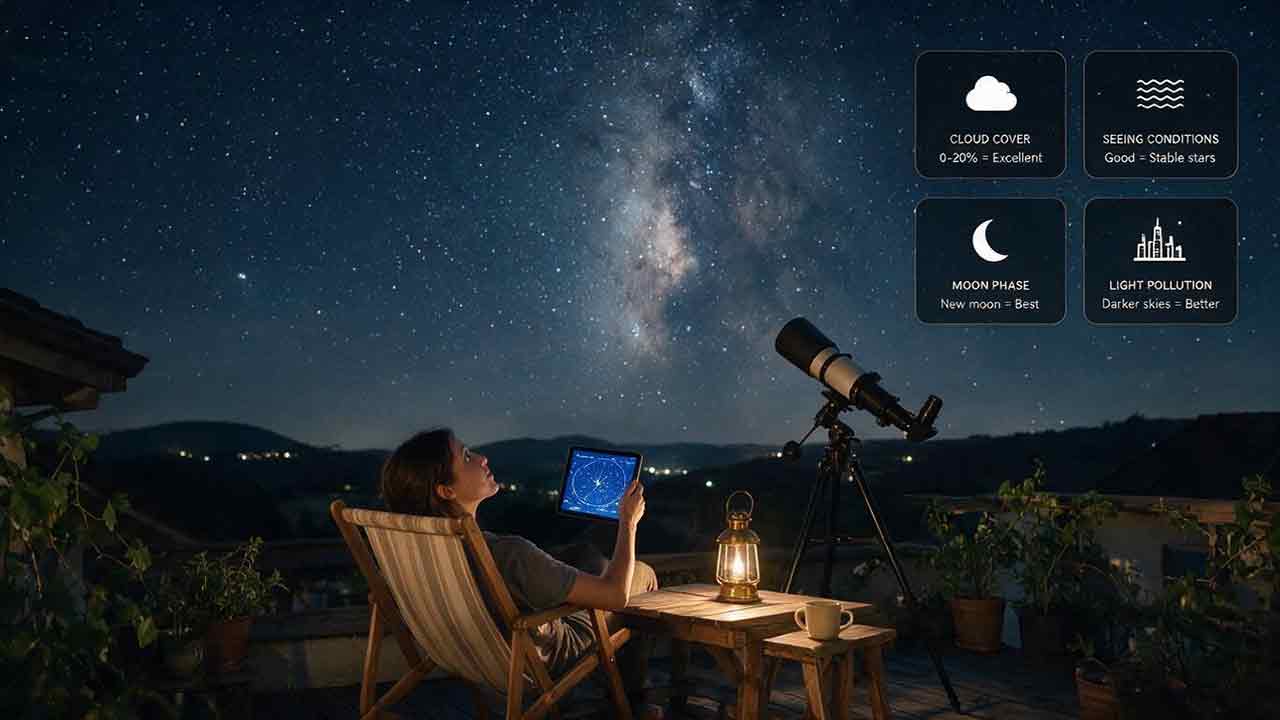
How to Check Whether Tonight Is Good for Stargazing
A useful stargazing forecast requires more than a clear-weather icon. This guide explains how to check hourly cloud cover, precipitation and lightning risk, atmospheric transparency, astronomical seeing, Moon position, twilight, target altitude, wind, dew, smoke, light pollution, and site access before deciding whether to observe. Readers will learn why a night can be excellent for planets but poor for galaxies, how to distinguish cloud cover from transparency and seeing, and how to match changing conditions to the Moon, Milky Way, meteor showers, clusters, double stars, and deep-sky objects. The article includes a 10-minute checking process, a CLEAR decision framework, a hypothetical worked example, forecast-tool comparisons, rescue strategies for marginal nights, troubleshooting advice, a complete checklist, and safety guidance for thunderstorms and hazardous travel.
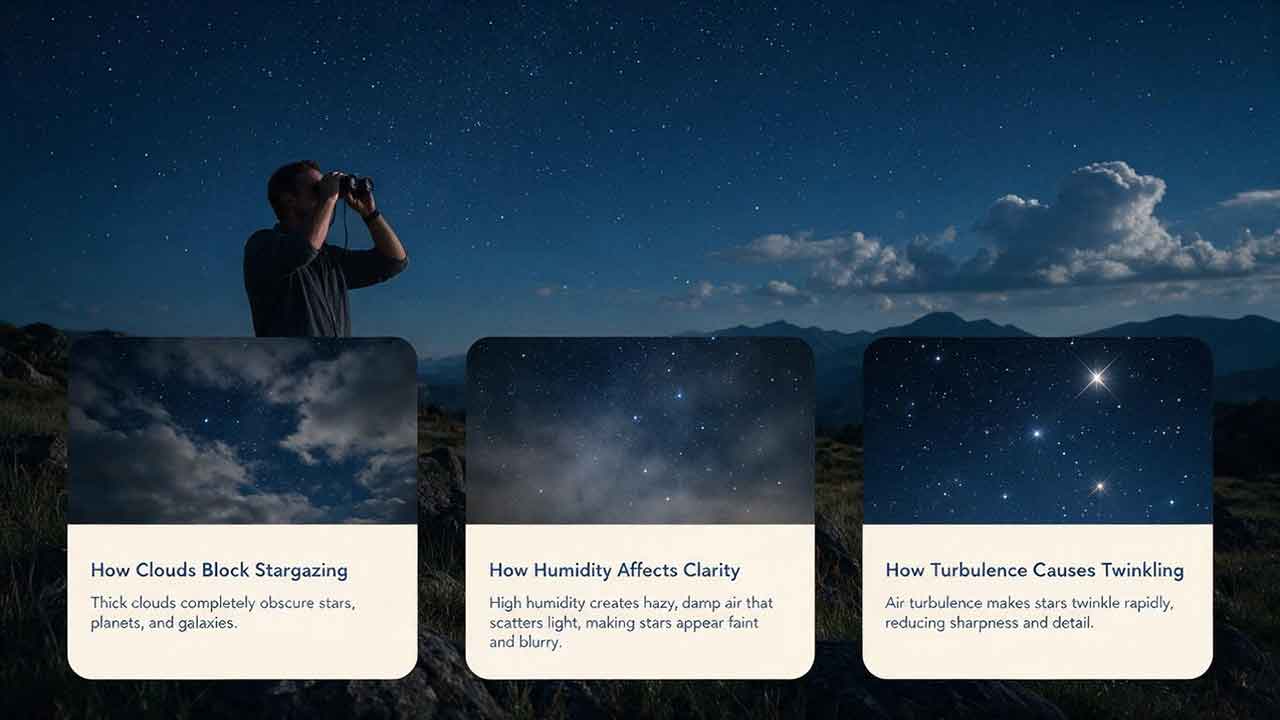
How Clouds, Humidity, and Air Turbulence Affect Stargazing
Clear skies do not always produce sharp telescope views, and high humidity does not automatically make a night unsuitable for astronomy. This practical guide separates cloud cover, transparency, moisture, dew risk, and atmospheric seeing so observers can diagnose conditions accurately. It explains how thin cirrus can weaken faint objects, why dew point is more useful than relative humidity alone for predicting condensation, and how turbulent air blurs planetary and lunar detail. The article introduces the original CAST planning framework—Clouds, Air moisture, Seeing, and Target—to help readers interpret forecasts and match each night to appropriate observing goals. A temperature–dew point calculation, target-selection tables, realistic observing scenarios, a go/change-target/cancel matrix, troubleshooting guide, and pre-session checklist turn weather data into practical decisions. Authoritative material from NASA, NOAA, the National Weather Service, the European Southern Observatory, and telescope-manufacturer documentation supports the scientific and equipment-care guidance.
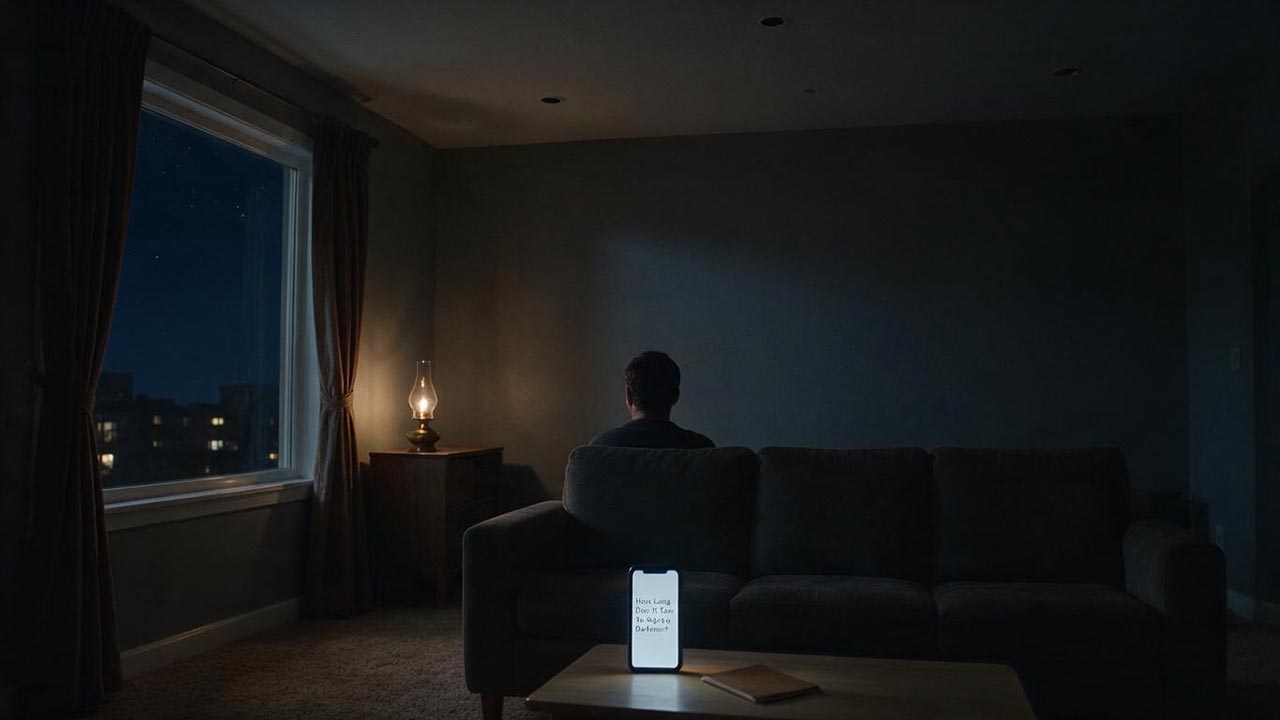
How Long Does It Take Your Eyes to Adjust to Darkness?
Your eyes begin adapting to darkness within seconds, but useful night vision develops in stages. Pupil dilation happens quickly, cone sensitivity improves during the first several minutes, and rod-based sensitivity can continue increasing for roughly 20–40 minutes after strong light exposure. This guide explains how rods, cones, rhodopsin, glare, age, eye health, and previous lighting affect the timing. Readers will learn how to preserve dark adaptation with dim red light, use averted vision for faint targets, organize a safe observing site, and match the waiting period to the Moon, planets, star clusters, galaxies, nebulae, or meteor showers. The article also includes an ADAPT planning framework, a real-world observing timeline, a light-source comparison, troubleshooting guidance, a detailed checklist, and signs that persistent night-vision difficulty should be evaluated by an eye-care professional.
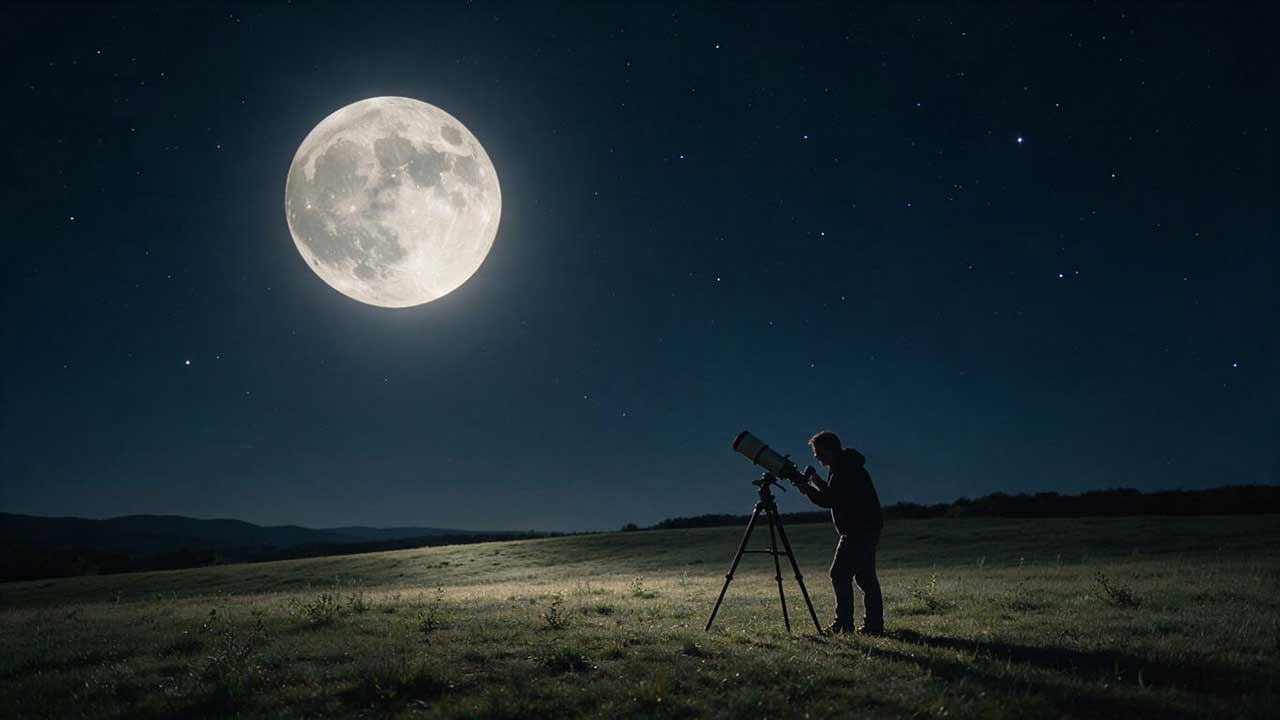
How Moonlight Affects Stargazing
Moonlight affects stargazing by brightening the sky background and reducing the contrast of faint celestial objects. This guide explains why galaxies, diffuse nebulae, the Milky Way, zodiacal light, and weak meteors are more vulnerable than planets, double stars, bright clusters, and the Moon itself. It shows why lunar illumination alone is not enough for planning: moonrise, moonset, altitude, target separation, atmospheric transparency, and local light pollution also shape the result. Readers will learn how each major Moon phase changes the best observing window, how to protect dark adaptation, when magnification or filters may help, and how to rescue an unexpectedly bright session. The article also includes a PHASE–TIME–HEIGHT–DISTANCE–AIR–TARGET planning framework, a first-quarter worked example, target-selection tables, common mistakes, a practical checklist, and useful FAQs.
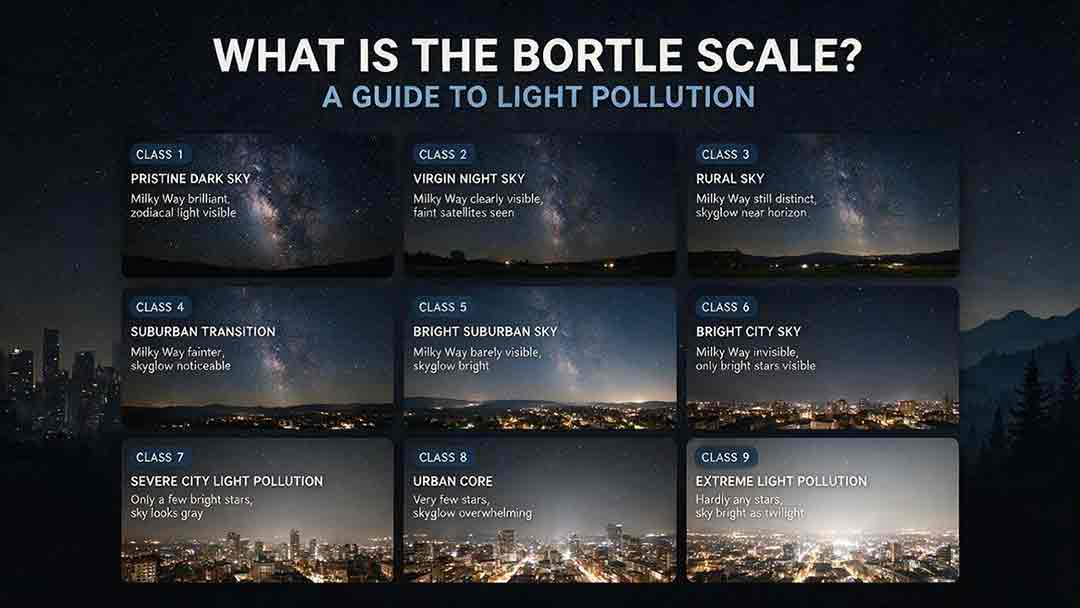
What Is the Bortle Scale? A Guide to Light Pollution
The Bortle Scale is a practical nine-class system for describing night-sky darkness, but using it correctly requires more than checking a color-coded map. This guide explains the visible signs of Classes 1 through 9, how light pollution changes astronomical targets, and why Moonlight, haze, clouds, local glare, and dark adaptation can alter an estimate. It introduces the original CLEAR field method for rating a site under controlled conditions, a reusable observation worksheet, and a confidence framework for reporting a class or class range honestly. Readers also learn how Bortle ratings differ from Sky Quality Meter readings, naked-eye limiting magnitude, and satellite-based maps. Practical target recommendations cover pristine rural skies, suburban locations, and bright city environments, while troubleshooting sections address common errors such as rating with the Moon up or converting one SQM reading directly into an exact class. The guide concludes with responsible outdoor-lighting steps supported by NASA, the U.S. National Park Service, DarkSky International, and the original Bortle publication.