Dark-Sky Trips & Gear
Explore 5 fascinating articles about dark-sky trips & gear
Plan your next stargazing adventure. Discover designated dark-sky parks, travel tips, and essential gear for night sky observation.
All Articles (5)
How to Stay Warm and Comfortable During Winter Stargazing
Winter stargazing requires more preparation than wearing one heavy coat because observers often remain nearly motionless for long periods. This guide explains how to check temperature, wind chill, road conditions, snow, and shelter before leaving; build a moisture-managing base, insulating middle, and wind-resistant outer layer; and protect hands, feet, head, face, chair, and ground contact. Readers will learn how to combine liner gloves with mittens, avoid sweat, plan warm-up breaks, use heated clothing safely, manage food and hydration, protect batteries, and prevent condensation when cold equipment returns indoors. The article also includes the WARMER planning framework, clothing and glove comparisons, a three-hour worked example, cold-stress warning signs, troubleshooting guidance, departure rules, FAQs, and a complete winter stargazing checklist.
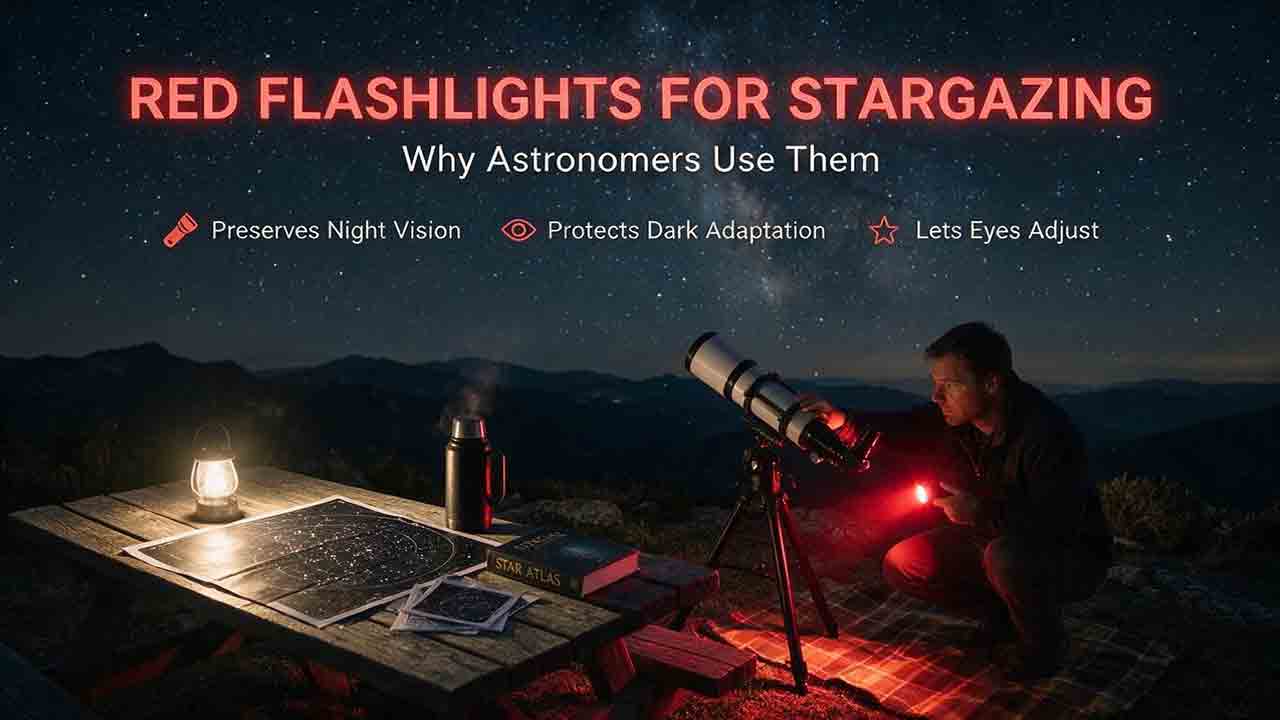
Red Flashlights for Stargazing: Why Astronomers Use Them
Astronomers use dim red flashlights because dark-adapted rod vision is less sensitive to long-wavelength red light than to much of the visible spectrum. A controlled red beam can illuminate charts, eyepieces, cables, and walking paths while causing less disruption than a typical white flashlight. This guide explains how rods, cones, rhodopsin, wavelength, brightness, exposure time, and beam direction shape the result. Readers will learn why red light is not harmless, how to compare handheld lights and headlamps, which product features prevent accidental white-light activation, how to configure a phone screen, and when safety requires a white emergency light. The article also includes the RED-SAFE buying framework, a task-lighting table, a worked observing example, DIY filter guidance, star-party etiquette, troubleshooting advice, FAQs, and complete purchase and field-use checklists.
Stargazing While Camping: A Practical Planning Guide
Camping can provide long, convenient access to dark skies, but a successful astronomy trip requires more than choosing the darkest location on a map. This guide explains how to combine campground rules, weather, Moon timing, food storage, wildlife protection, quiet hours, power, dew control, and telescope setup into one workable plan. It introduces the original CAMP framework—Confirm access, Align conditions, Map functional zones, and Prepare fallbacks—plus a three-zone campsite layout separating sleeping, service, and observing areas. Readers can compare developed, walk-in, backcountry, dispersed, and astronomy-focused campgrounds; build a night schedule from daylight arrival through morning pack-up; and use practical decision tables for Moonlight, cloud, wind, dew, neighboring lights, and campfire impacts. The article also includes a hypothetical two-night family plan, a go/modify/cancel decision tree, troubleshooting guidance, and a complete campsite checklist grounded in NASA, National Park Service, and National Weather Service resources.
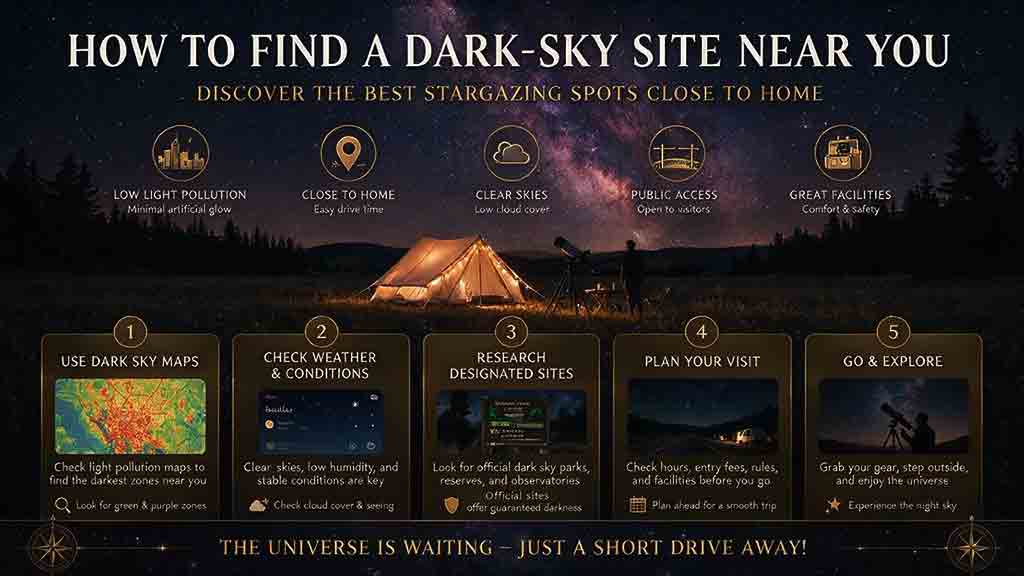
How to Find a Dark-Sky Site Near You
Finding a dark-sky site requires more than selecting the darkest color on a light-pollution map. This guide explains how to identify promising regions, search certified Dark Sky Places and official public-land directories, verify legal nighttime access, inspect roads and horizons, check Moon and weather conditions, and validate a location in daylight and after dark. Readers will learn how satellite nighttime-light data differs from ground-level sky quality, what a Bortle estimate can and cannot reveal, when a sky quality meter is useful, and how to compare parks, campgrounds, observatories, club fields, and remote public lands. The article also includes the DARK-SITE decision framework, a three-location worked example, a trip-value calculation, safety and etiquette guidance, gear recommendations, troubleshooting advice, FAQs, and a complete site-selection checklist.
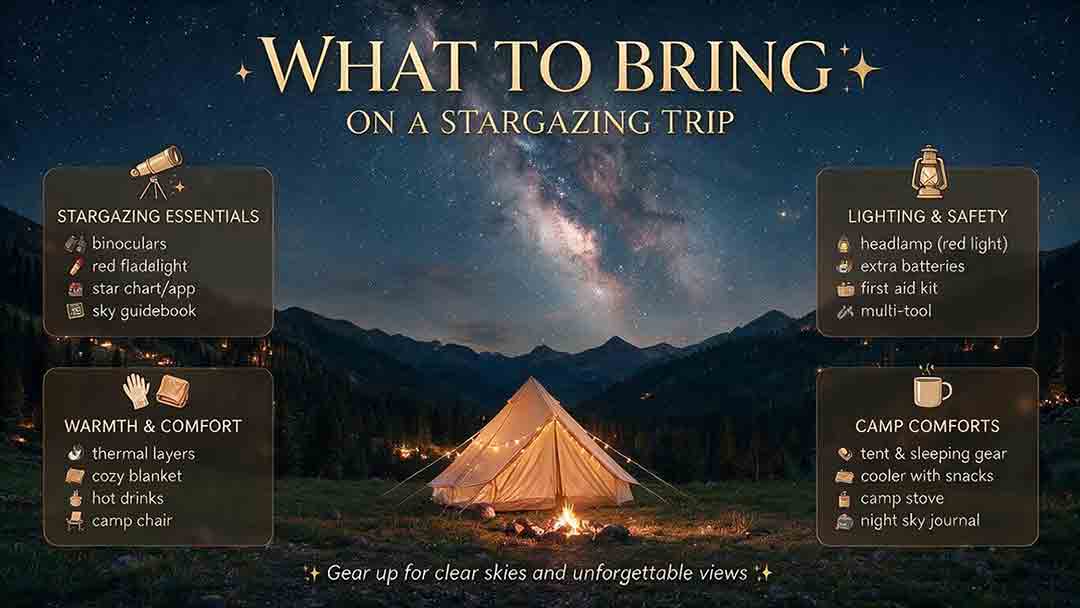
What to Bring on a Stargazing Trip
A successful stargazing trip depends less on carrying every astronomy accessory and more on bringing the right safety, comfort, navigation, and observing essentials. This practical guide explains what to pack for backyard sessions, car-access dark-sky sites, hike-in locations, public star parties, overnight campgrounds, and astrophotography trips. It introduces the original NIGHT framework—Navigation, Insulation, Gear, Handling darkness, and Testing power—to help readers plan systematically. The article includes essential and optional equipment tables, a realistic battery-capacity calculation, trip-length checklists, dark-sky etiquette, lightning guidance, site-setup steps, and troubleshooting for common problems such as dew, failed lights, unstable tripods, missing adapters, and full memory cards. Readers also learn how to protect night vision, reduce unnecessary gear, verify legal access, prepare for changing nighttime temperatures, and plan a safe return. NASA, the U.S. National Park Service, and the National Weather Service provide the main authoritative guidance.