Constellations & Star Hopping
Explore 5 fascinating articles about constellations & star hopping
Learn to navigate the night sky manually. Step-by-step guides on finding major constellations and tracking down deep-sky objects.
All Articles (5)
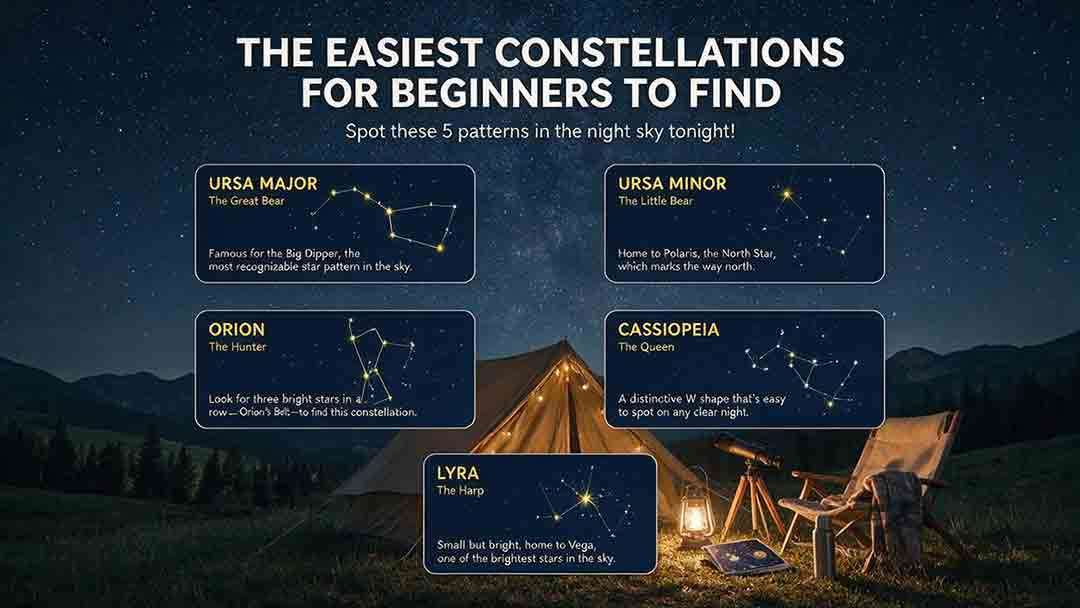
The Easiest Constellations for Beginners to Find
This beginner-friendly guide explains how to find Orion, Ursa Major through the Big Dipper, Cassiopeia, Cygnus, and Scorpius using clear naked-eye observing steps. It compares each pattern through an original Beginner Visibility Score and shows readers how to choose a first target based on season, latitude, light pollution, moonlight, and horizon visibility. The guide also clarifies the difference between constellations and asterisms, explains how the Big Dipper can point toward Polaris, and provides dedicated recommendations for Southern Hemisphere observers, including Crux. Practical tools include the Anchor-Pattern Method, the Three-Check Rule, a 10-minute observing session, city-sky guidance, troubleshooting advice, an equipment comparison, and a safety checklist. Authoritative references from the International Astronomical Union, NASA, NSF NOIRLab, and the European Southern Observatory support the key astronomical facts.
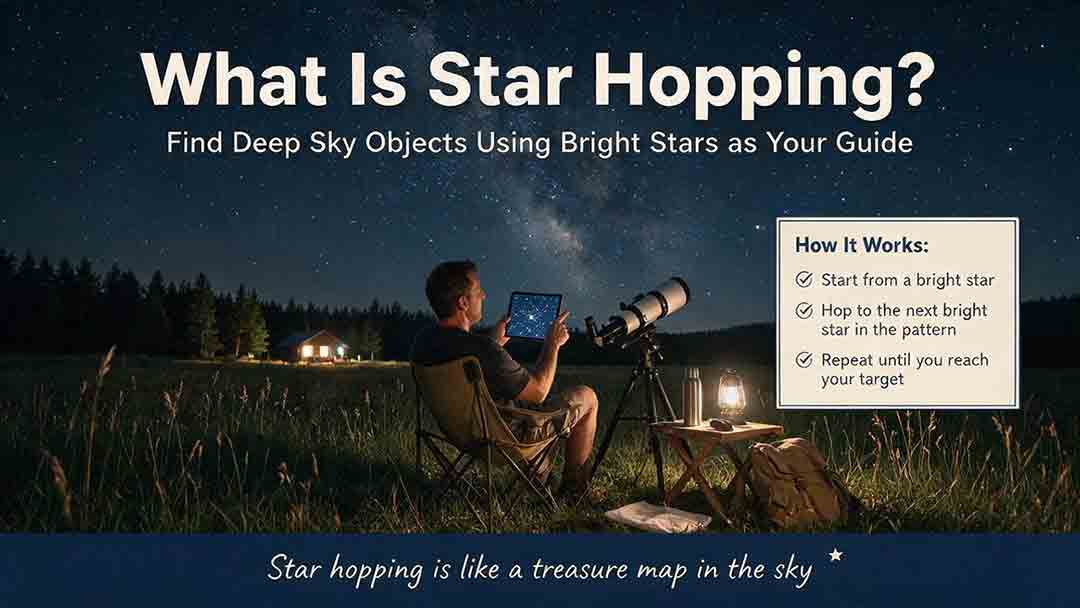
What Is Star Hopping and How Do You Do It?
Star hopping is a practical way to navigate the night sky by moving from a bright, recognizable star to a fainter target through a sequence of visible star patterns. This guide explains how beginners can plan a reliable route, align a finder, match a star chart to a telescope’s field of view, and recognize rotated or mirror-reversed images. It introduces the Anchor–Path–Field–Confirm method, provides a step-by-step observing process, and shows how field-of-view estimates can help determine a practical chart scale. A worked example demonstrates how to locate Messier 13 using the Keystone of Hercules, while the troubleshooting table addresses common problems such as finder misalignment, excessive magnification, incorrect chart orientation, and targets that remain invisible despite correct pointing. The included field checklist gives binocular and telescope users a repeatable method for planning and completing future star hops.
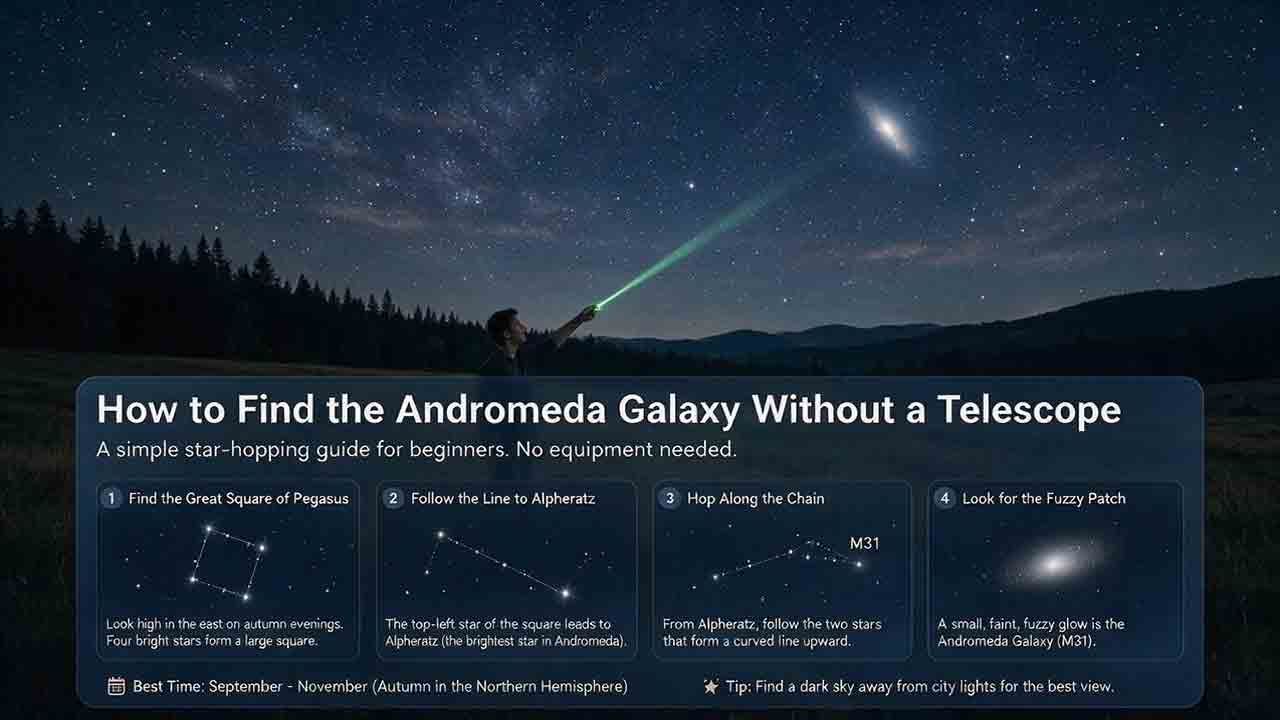
How to Find the Andromeda Galaxy Without a Telescope
Finding the Andromeda Galaxy without a telescope is possible when you know which stars to use as landmarks. This practical guide explains how to start at the Great Square of Pegasus, identify Alpheratz, follow the Andromeda star chain to Mirach, and use two nearly equal short hops to reach Mu Andromedae and M31. It also explains what the galaxy realistically looks like to the naked eye, why dark skies and averted vision matter, and how binoculars can help confirm the target. Beginners can use the six-point observing checklist, three-night practice method, troubleshooting guidance, and reusable observation log to improve each attempt. The guide distinguishes calculated angular distances from practical field estimates and clearly explains its source-checking process without claiming personal testing. It is designed primarily for Northern Hemisphere observers while also addressing visibility limitations from Southern Hemisphere locations.
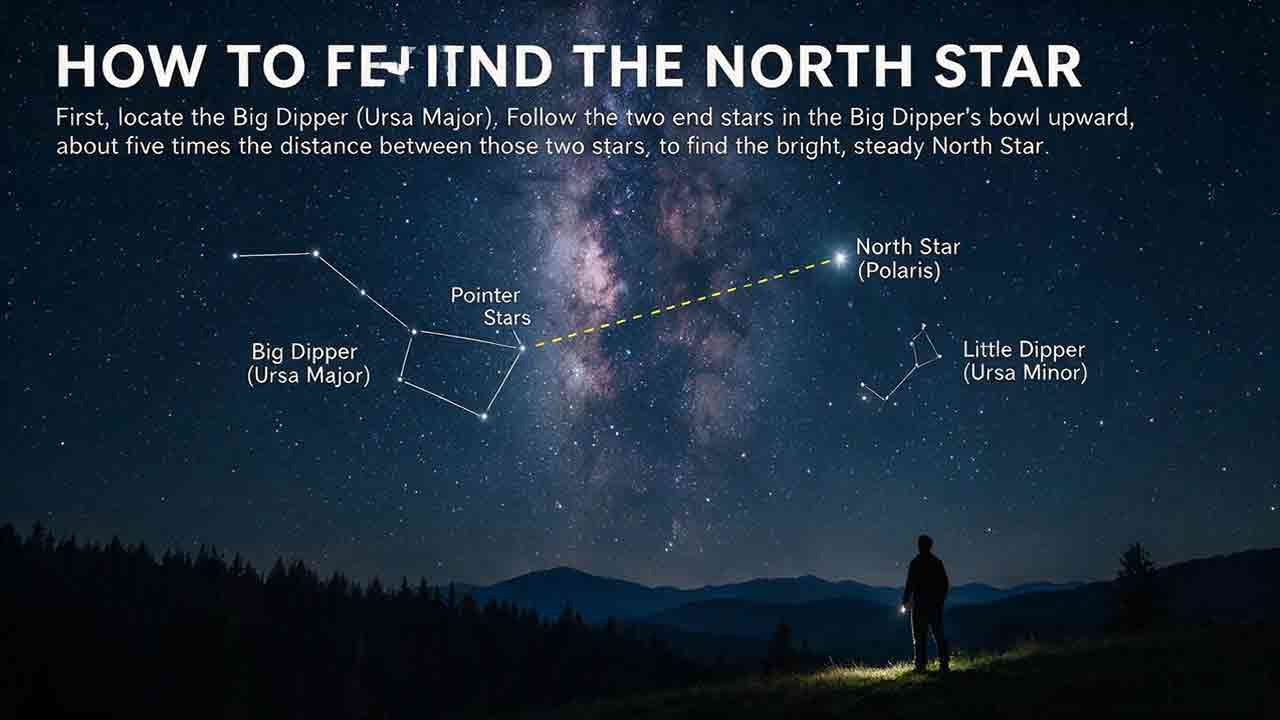
How to Find the North Star
Finding the North Star becomes straightforward once you know how to use the Big Dipper’s two pointer stars, Merak and Dubhe. This practical guide walks beginners through the complete process of locating Polaris, confirming it by position and latitude, and avoiding common mistakes such as choosing the brightest star or following the pointer line in the wrong direction. It also explains why Polaris appears nearly stationary, how its altitude relates approximately to an observer’s northern latitude, and why the full Little Dipper may be difficult to see under city skies. Readers will find troubleshooting advice for haze, light pollution, blocked horizons, misleading astronomy apps, and compass differences caused by magnetic declination. The article also includes a quick confirmation checklist, viewing-condition comparisons, an observation log, and a seven-step field routine. Clear safety guidance explains that Polaris is useful for approximate orientation but should not replace proper navigation tools.
How to Use the Big Dipper to Find Other Stars
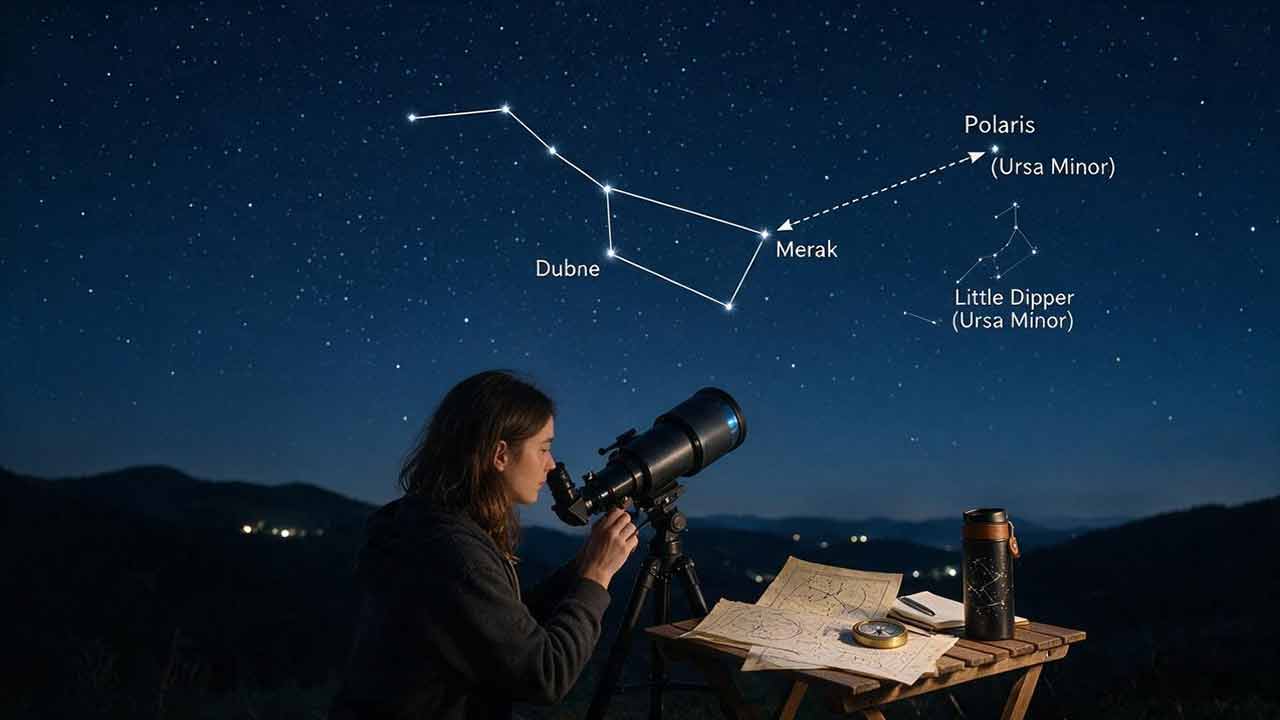
The Big Dipper is more than an easy-to-recognize star pattern—it is a practical starting point for navigating the Northern Hemisphere sky. This beginner-friendly guide explains how to use Merak and Dubhe to locate Polaris, follow the handle’s curve to Arcturus, continue toward Spica, and use Megrez and Phecda to identify the general region of Leo and Regulus. It introduces a clear Route–Pattern–Trait method for confirming each target instead of relying on brightness or color alone. Readers will also learn how latitude, season, light pollution, horizon obstructions, and nearby planets can affect a star-hop. Quick route summaries, troubleshooting guidance, binocular recommendations, an observation record, and a practical checklist make the article useful both for planning and for consulting outdoors. The guide relies on established astronomy references and clearly distinguishes precise pointer routes from broader directional guides.