Night Sky Guides
Explore 5 fascinating articles about night sky guides
Monthly sky maps, meteor shower alerts, and planetary conjunction guides. Never miss an astronomical event.
All Articles (5)
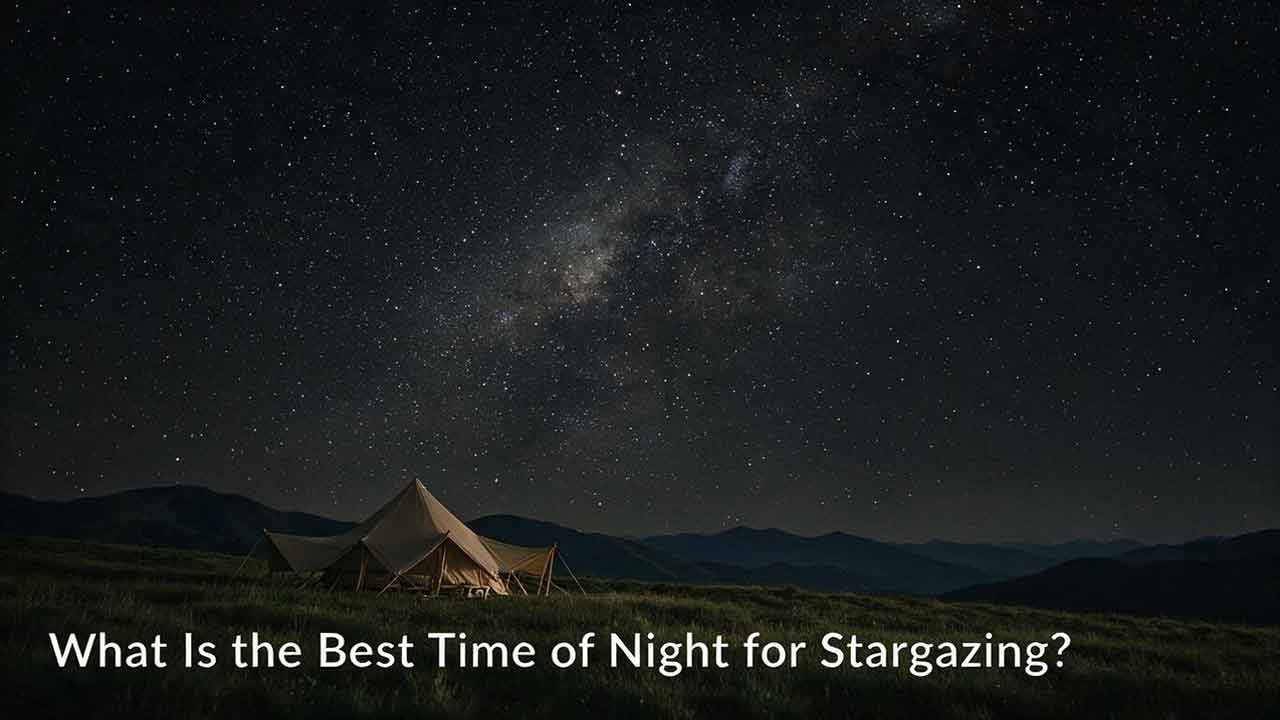
What Is the Best Time of Night for Stargazing?
The best time of night for stargazing is not a fixed hour such as midnight. It is the clearest, darkest period when the Moon causes minimal interference and your chosen target is high enough above the horizon. This practical guide explains how astronomical twilight, moonrise and moonset, target altitude, cloud cover, transparency, atmospheric seeing, light pollution, season, and latitude affect observing conditions. It also introduces the CosmoBasics Five-Filter Night Window, a straightforward planning framework for combining darkness, Moon conditions, target position, weather, and safe site access. Readers can use the included worked example, decision guidance, checklist, and fill-in planning table to calculate a realistic observing window for a specific night. Separate recommendations cover the Moon, planets, the Milky Way, galaxies, nebulae, meteor showers, beginners, urban observers, families, and astrophotographers, with safety guidance for observing Mercury and Venus near the Sun’s direction.
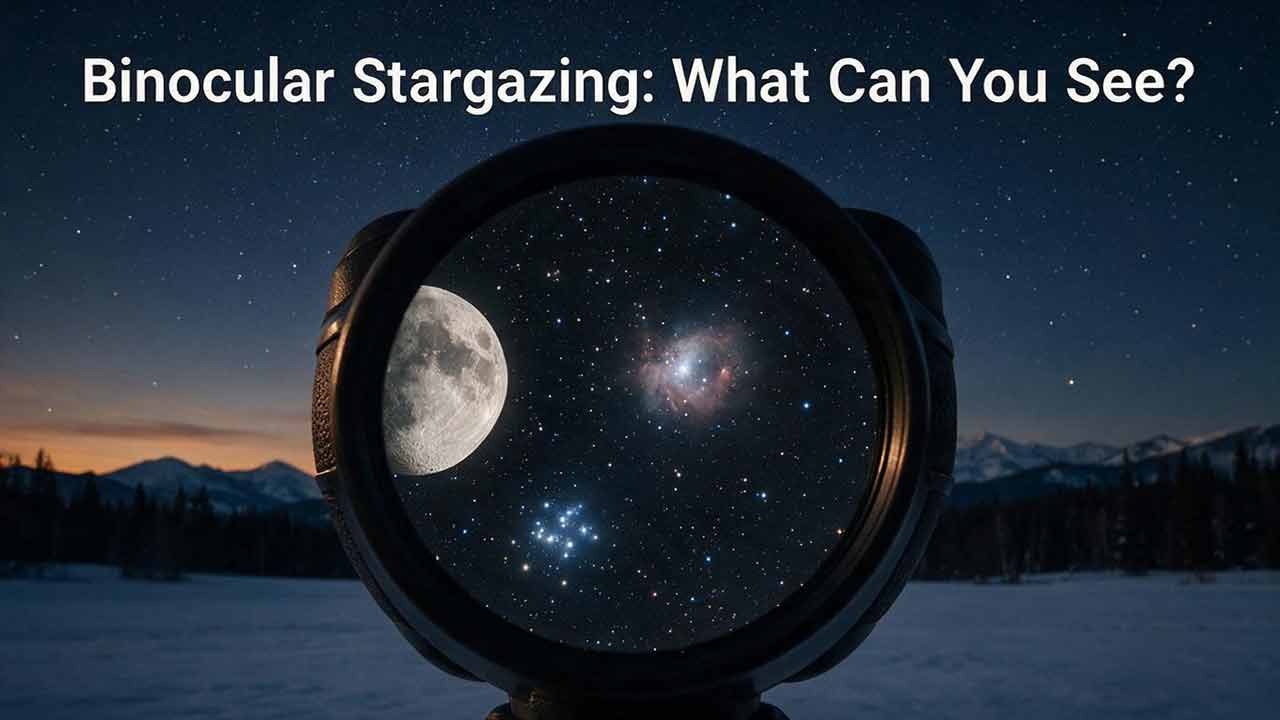
Binocular Stargazing: What Can You See?
This guide explains what beginners can realistically see through binoculars at night and how to get the most from a simple astronomy setup. It covers practical targets including the Moon, Jupiter’s Galilean moons, open star clusters, nebulae, galaxies, Milky Way star fields, and bright comets. The article compares common binocular sizes such as 8x42 and 10x50, explains how magnification, objective diameter, exit pupil, and stability affect observations, and provides a practical framework for choosing suitable targets. It also introduces original tools including a Binocular Target Fit Score, a Jupiter moon tracking table, and a visibility log to help observers understand whether limitations come from sky conditions, target size, or equipment handling. Based on NASA guidance, professional astronomy resources, and official optical documentation, this article focuses on realistic expectations rather than exaggerated views, helping beginners build better observing habits and decide when binoculars are enough or when a telescope may be the next step.
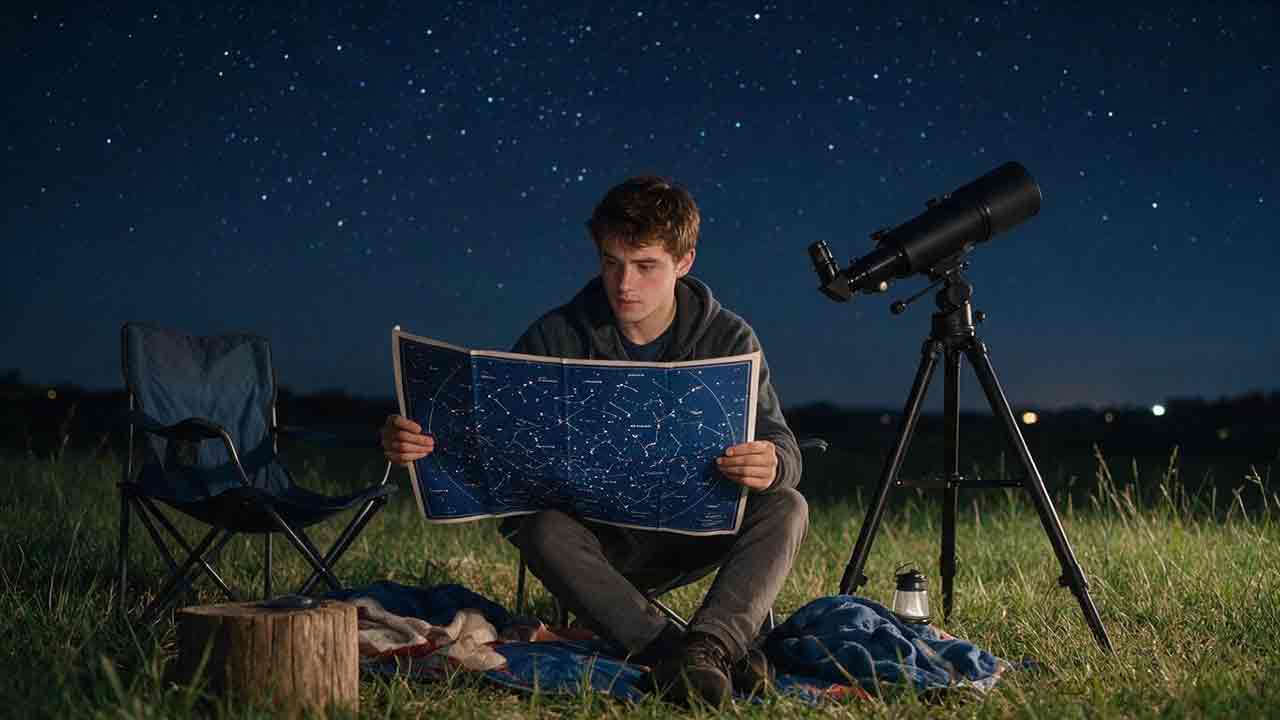
How to Read a Star Chart
Learning how to read a star chart becomes much easier once you understand how the flat map relates to the curved sky above you. This practical beginner’s guide explains how to select the right chart, set the correct location and observing time, align the chart with the horizon, and identify reliable starting points using bright stars and recognizable patterns. It introduces the Three-Anchor Verification Method, which checks direction, brightness, and nearby-star geometry before an identification is accepted. Readers will also learn how magnitude symbols, celestial coordinates, angular distances, planispheres, binocular charts, and telescope finder charts work. A five-minute field exercise, an Orion example, troubleshooting guidance, and a first-night checklist turn the explanations into a repeatable observing process. The guide also addresses light pollution, chart projection distortion, mirrored telescope views, moving planets, and essential solar-viewing safety. It is designed to help beginners move confidently from one confirmed landmark to their first successful star hop.
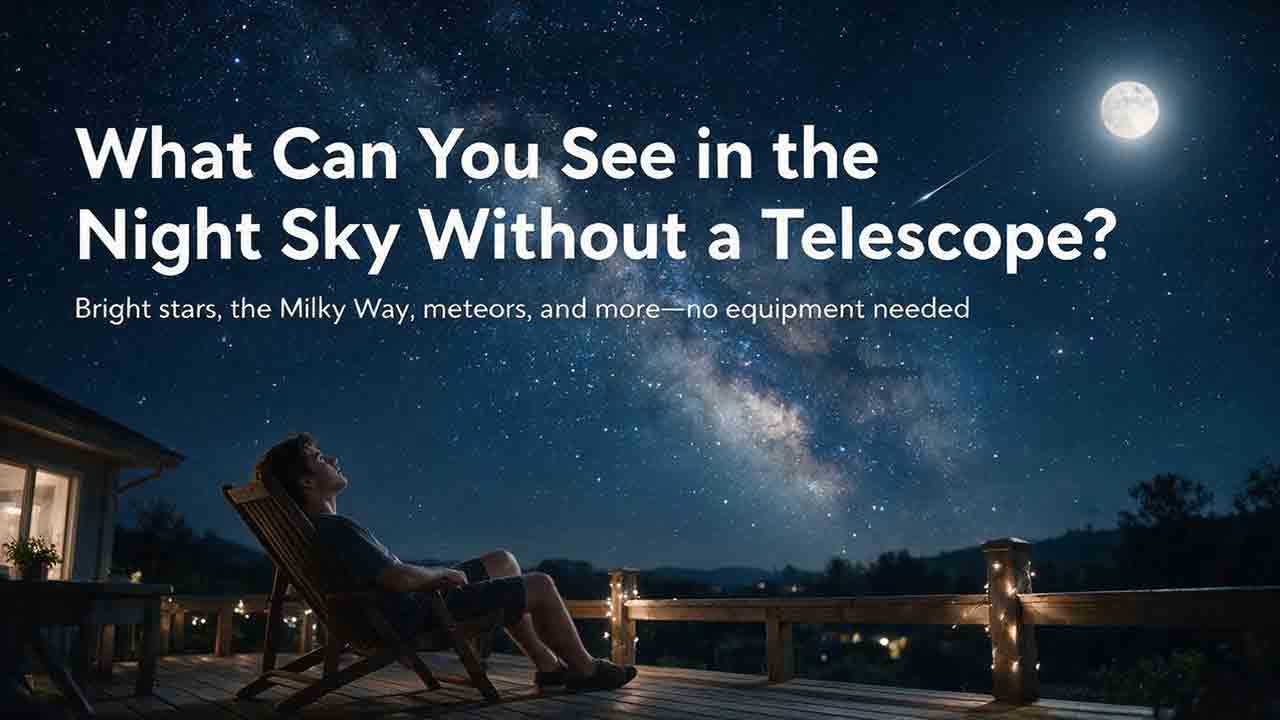
What Can You See in the Night Sky Without a Telescope?
You do not need a telescope to begin exploring the night sky. This practical guide explains which objects can be seen with unaided eyes, from the Moon, Mercury, Venus, Mars, Jupiter, and Saturn to bright stars, constellations, star clusters, meteors, and artificial satellites. It also describes the darker conditions needed to find the Milky Way, the Andromeda Galaxy, the Orion Nebula, and the Magellanic Clouds. Readers will learn what these objects realistically look like, why astronomical photographs show more color and detail than human vision, and how light pollution, moonlight, altitude, haze, season, and latitude affect visibility. The guide includes a Naked-Eye Visibility Ladder, a realistic 30-minute observing session, location-based target recommendations, a practical checklist, and troubleshooting advice. It also clearly separates dependable beginner targets from advanced challenges while providing essential safety guidance for solar and daytime observing.
How to Start Stargazing: A Beginner’s Guide
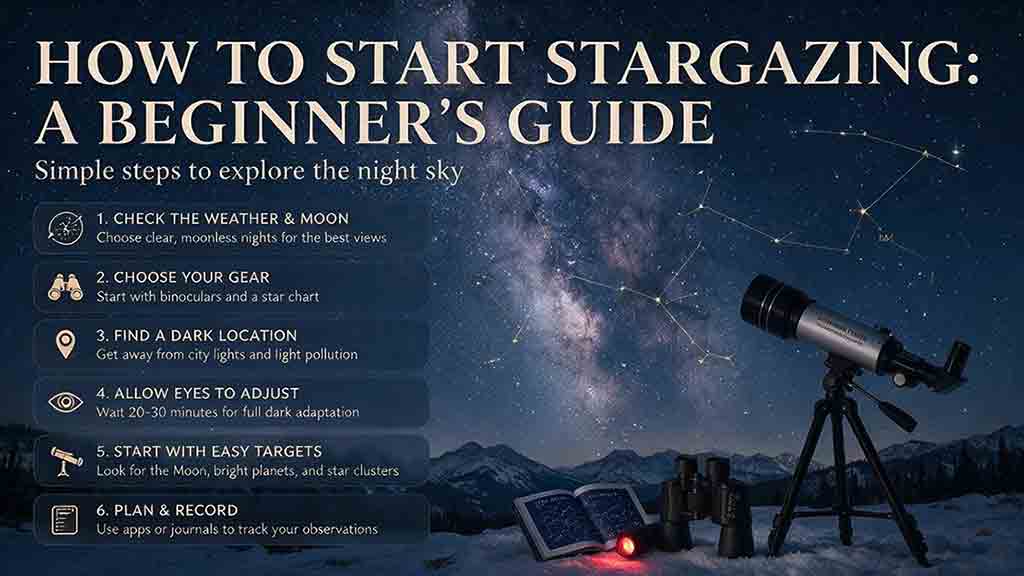
Starting to explore the night sky does not require an expensive telescope or a remote dark-sky destination. This beginner-friendly guide explains how to plan a simple, safe, and rewarding first stargazing session using your unaided eyes, a current star chart, and optional binoculars. Learn how to select a realistic target, check cloud cover and Moon conditions, evaluate a viewing location, protect your night vision, and find objects using recognizable star patterns. The guide also includes a practical First-Night Readiness Score, a 45-minute observing plan, equipment comparisons, common mistake warnings, and troubleshooting advice for blurry or disappointing views. Whether you live in a city, suburb, or rural area, these steps will help you match targets to local conditions, build confidence over several short sessions, and decide whether binoculars or a telescope would genuinely improve your observing experience.